Why We Chose Solid Bronze for Our Heirloom Collection
Rosary crucifixes and centerpieces have been made from a wide range of materials over the centuries. Common choices include plated alloys, silver, gold, pewter, copper, and bronze. Each material has its own appearance, weight, cost, and long-term characteristics.
Plated Metals
Plated metals are a practical and cost-effective option. They allow makers to achieve the look of silver, gold, or bronze without using those materials throughout the entire piece.
The main drawback is that plating can wear over time. Scratches, repeated handling, moisture, and friction may eventually reveal the base metal underneath. The quality and thickness of the plating can make a major difference in how well the finish holds up.
Gold and Silver
Gold and silver have long been valued for their beauty and significance. Both can produce elegant devotional pieces, especially when paired with fine craftsmanship.
Gold is relatively soft and can scratch or deform if handled roughly. Solid gold is also expensive, which makes it uncommon in everyday rosaries.
Silver has a bright, traditional appearance, but it naturally tarnishes over time and may need occasional polishing. Cost and maintenance are two reasons many rosary makers use silver-plated, gold-plated, or silver-tone metals instead of solid precious metals.
Pewter
Pewter is commonly used for rosary centerpieces and crucifixes because it can capture a high level of detail at a more accessible cost. It also has a soft silver-gray appearance and does not tarnish as dramatically as silver.
Pewter is softer than bronze and many other metal alloys. Thin sections, loops, and detailed edges may be easier to bend, dent, or scratch. A well-made pewter piece can still hold up well during normal use, but the thickness and design of the casting matter.
Copper
Copper has a warm, distinctive color that can give a rosary a traditional and handcrafted appearance. It also develops a natural patina over time.
Because copper reacts with moisture, skin oils, and the surrounding environment, it may darken or develop green oxidation. Some people appreciate this aging process, while others prefer a finish that changes less over time.
Bronze
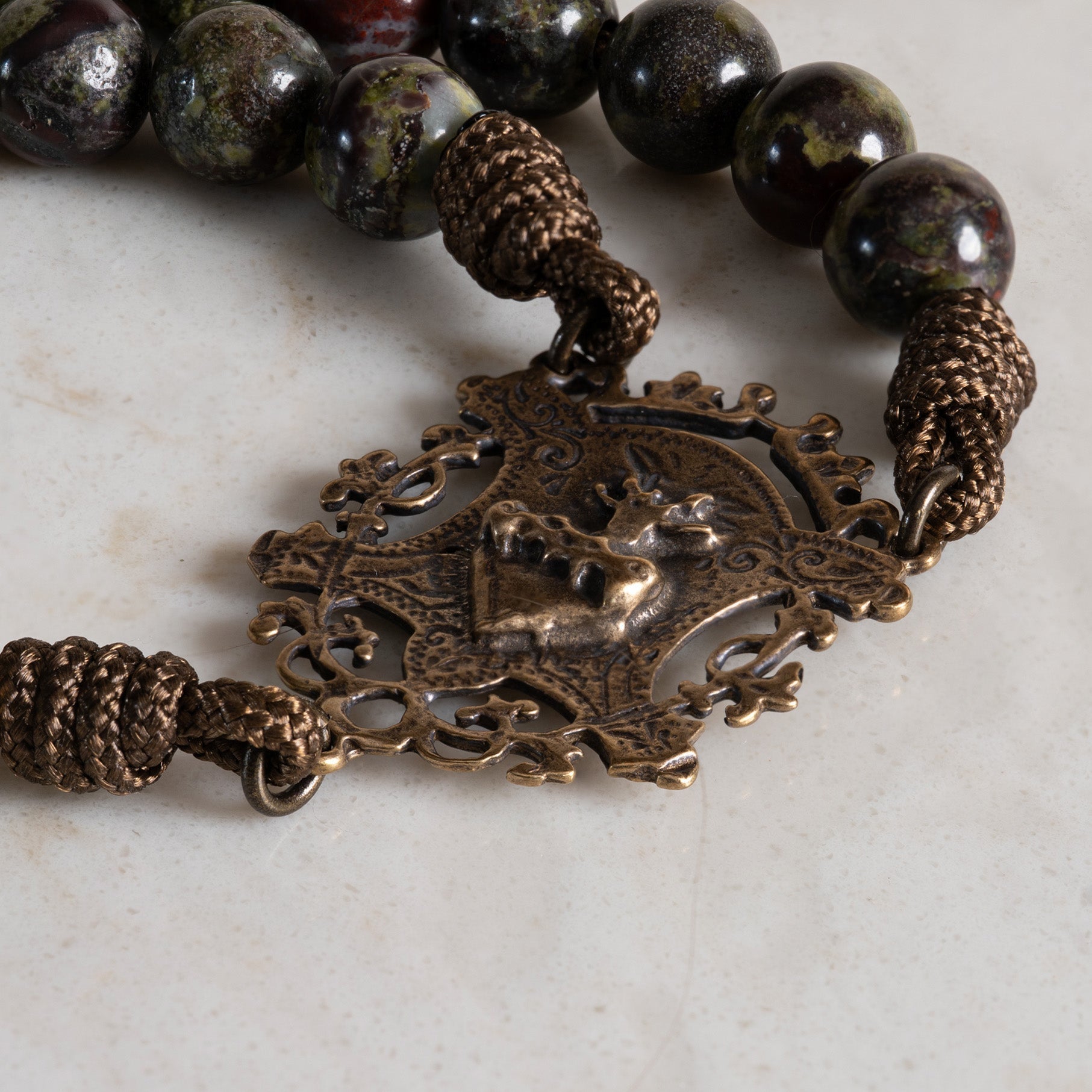
Bronze is a copper-based alloy known for its warm tone, substantial feel, and traditional appearance. It has been used for devotional artwork, medals, sculpture, and religious objects for centuries.
Compared with pewter, bronze is generally harder and more resistant to bending or denting. It also develops a natural patina, usually darkening into deeper brown tones as it ages. This can give the piece added character rather than making it appear worn.
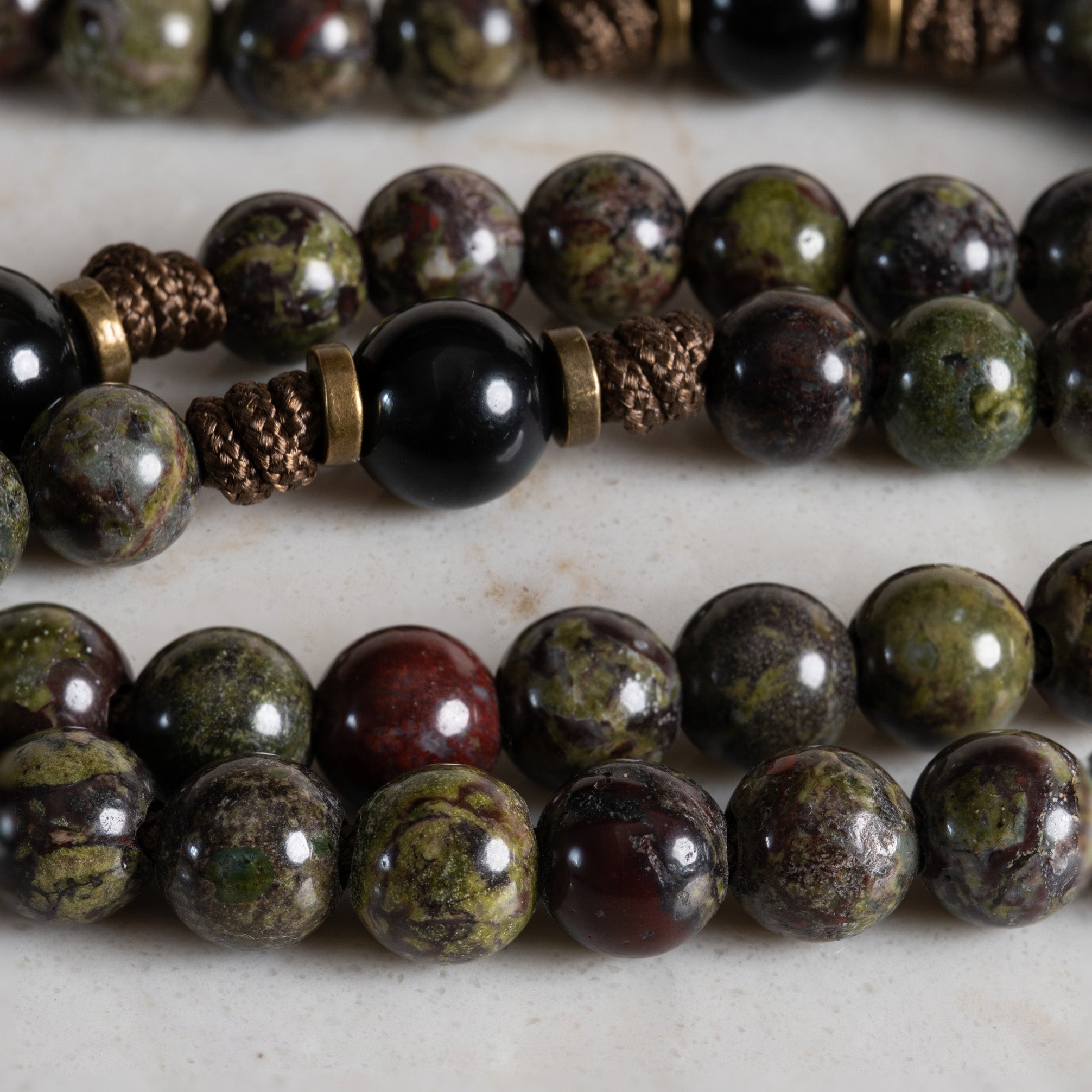
At San Giovanni Cord & Stone, we use solid bronze devotional pieces because they complement the weight and natural variation of gemstone beads. The metal has an old-world appearance, but it also works well with modern materials such as durable paracord.
Our goal is to bring those two ideas together. Traditional bronze casting provides the detail and character of an heirloom devotional piece, while cord construction adds flexibility and strength for regular use.
No metal is completely maintenance-free, and the shape and thickness of a crucifix or centerpiece matter just as much as the material itself. Still, bronze offers the balance of durability, weight, and timeless appearance that best fits the rosaries we create.