Article: Why We Use Cord Instead of Chain in Our Rosaries
Why We Use Cord Instead of Chain in Our Rosaries
Cord and chain are two of the most common types of rosary construction used today. There are pros and cons to each type of construction used.
Chain Rosaries
Chain rosaries are typically constructed with wire or eye pins. Eye pins are short, pre-cut pieces of wire with a loop already formed at one end.
Each bead has a drilled hole through which the wire or eye pin is inserted. The excess wire is trimmed, then shaped with pliers into a second loop. Before that loop is fully closed, it is connected to the loop of the previous bead. This process is repeated bead by bead until each decade is complete.
The finished sections are usually connected to the centerpiece and crucifix with jump rings.
Benefits of chain rosaries
Chain construction offers a traditional appearance, flexible movement, and clear spacing between beads. It can also make it easier to create longer rosaries that may be worn around the neck, depending on their overall length and design.
Considerations with chain rosaries
Because every bead is joined through its own wire loop, a chain rosary contains many individual connection points. The durability of the finished rosary depends on factors such as wire gauge, metal hardness, loop shape, and how securely each connection is closed.
Metal components may also tarnish, darken, or wear over time, depending on the material and finish. Since chain rosaries are made with a wide range of wire gauges and construction methods, it can be difficult to judge their strength by appearance alone.
Cord Rosaries
Cord rosaries are commonly made with paracord or other durable braided cord. Different cord types vary in thickness, flexibility, abrasion resistance, and rated strength.
At San Giovanni Cord & Stone, we use Type 95 cord, which is rated to support approximately 95 pounds under ideal testing conditions. Micro cord is also used by some makers. Although it can be strong for its size, thinner cord may be more vulnerable to abrasion and fraying over time.
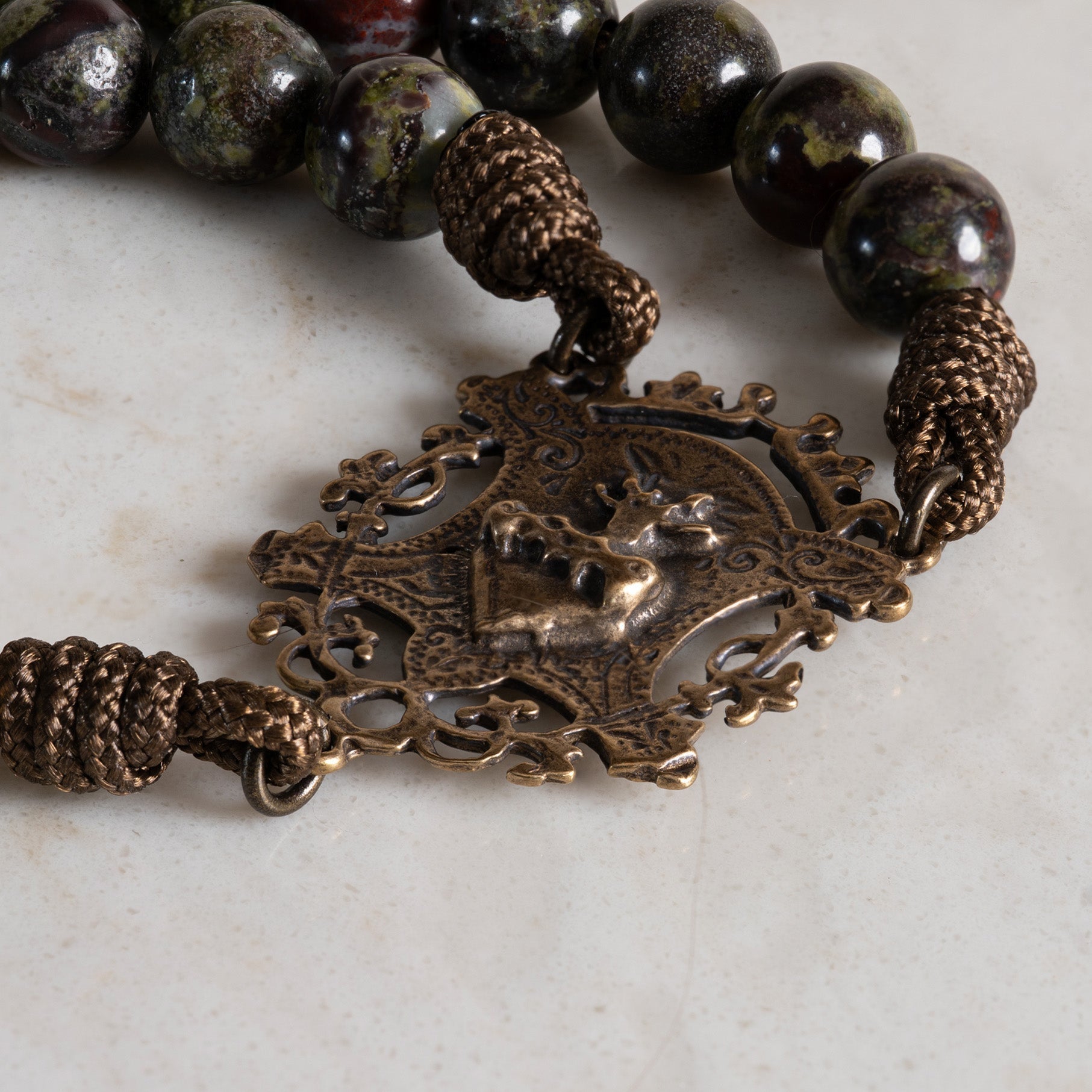
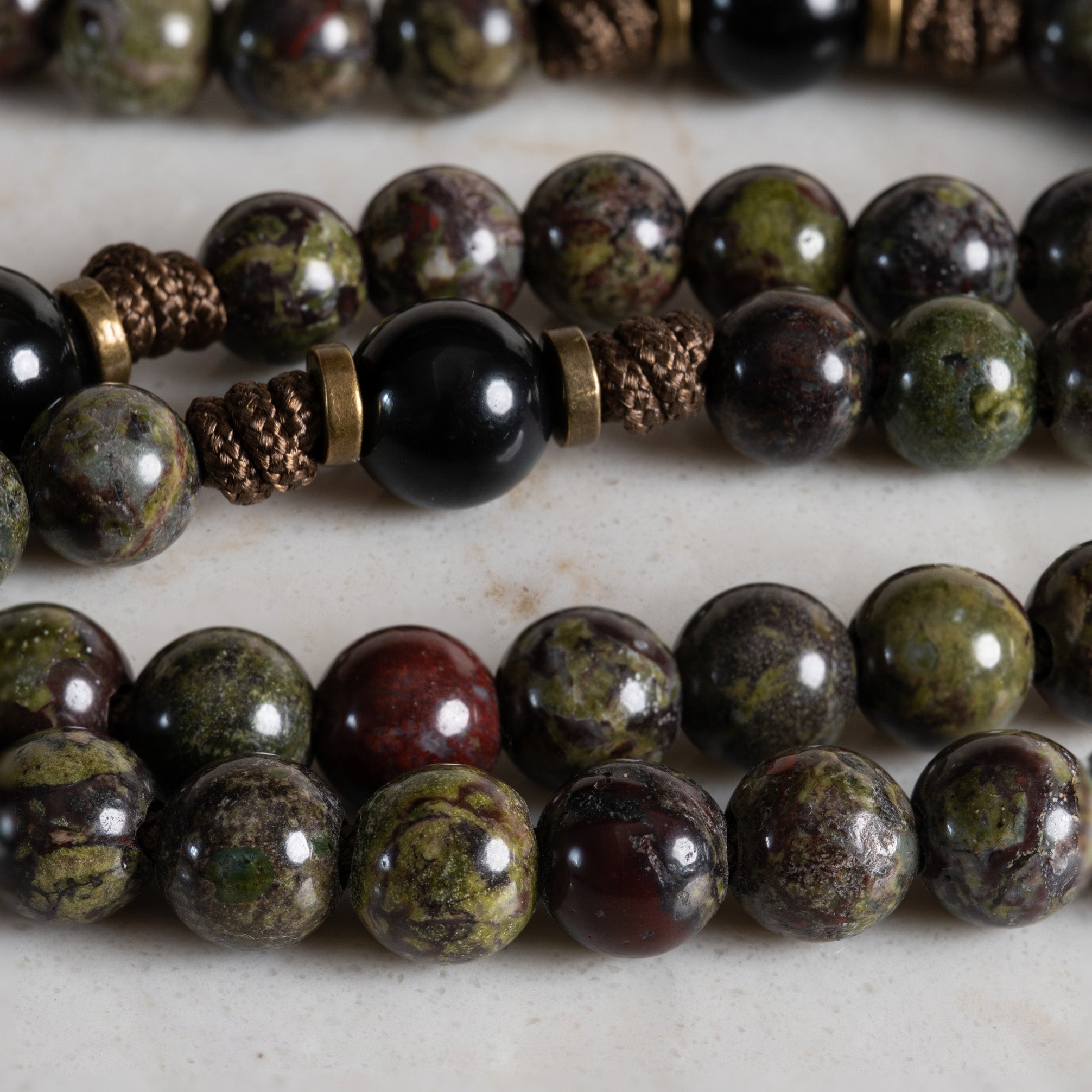
Cord rosaries are made by threading the cord through the beads and securing the construction with knots. Barrel knots are often tied around the Our Father beads and at connection points. These knots may be formed as closed knots or as looped connections, depending on how the cord attaches to the centerpiece or crucifix.
Benefits of cord rosaries
The main advantages of cord construction are strength, flexibility, and durability. A well-made cord rosary is designed to withstand regular handling and daily prayer.
Because the beads are supported along continuous cord, there are fewer individual connection points throughout the decades than in a traditional eye-pin rosary. Cord construction also creates a substantial, tightly finished appearance and may allow some beads to move slightly along the cord as they are handled during prayer.
Considerations with cord rosaries
Some people simply prefer the traditional appearance, movement, and metallic feel of a chain rosary.
Cord rosaries may also have a smaller overall circumference, depending on their construction and bead spacing. As a result, some designs may not be suitable for wearing around the neck unless they are intentionally made longer.
No rosary is completely immune to wear. Cord can eventually abrade or fray, while metal rings and connection points at the centerpiece and crucifix can still require inspection or repair over time.
Why We Choose Cord
Both chain and cord rosaries can be beautiful, meaningful, and well made. Each construction style offers a different appearance, feel, and set of practical advantages.
At San Giovanni Cord & Stone, we choose cord because it best supports the kind of rosary we want to create: substantial, flexible, and suited for regular use. Continuous cord reduces the number of individual connections throughout the decades while allowing natural gemstone beads to move comfortably in the hand.
Our goal is not to replace the traditional beauty of chain construction, but to offer a rosary made with daily prayer in mind—something that can be carried, handled, and prayed with confidently for years to come.
No rosary is completely immune to wear, and every construction method depends on careful craftsmanship. For us, cord provides the balance of durability, comfort, and appearance that best reflects our approach to making rosaries.